
DATA NEEDS CLEAR PATHWAYS.
Universal BACnet router
Three routers for different BACnet network structures: from a phased transition to BACnet/SC to a hub structure for large networks.
As a BACnet network grows in size, the demands on its structure, computing power, and secure communication increase. MBS Universal BACnet Routers connect BACnet networks across different transmission media. They route data packets between BACnet/MS/TP, BACnet/Ethernet, BACnet/IP, and BACnet/SC.
The three routers differ in terms of their interfaces, hardware specifications, and intended use. This ensures that there is a suitable model available for existing BACnet infrastructures, separate network segments, and large BACnet/SC topologies.
What is a Universal BACnet Router?
A UniversalBACnet Router connects network segments that use different BACnet transmission media. It forwards BACnet data packets from one network to another. This allows serial BACnet/MS/TP segments, BACnet/Ethernet, BACnet/IP, and BACnet/SC to be connected within a common BACnet infrastructure.
A router operates within the BACnet communication standard. If systems using different communication protocols need to be connected, a universal gateway handles the translation.
Router Overview
The choice of router depends on the existing network structure, the number of IP and MS/TP segments, the planned BACnet/SC topology, and the volume of data to be processed.
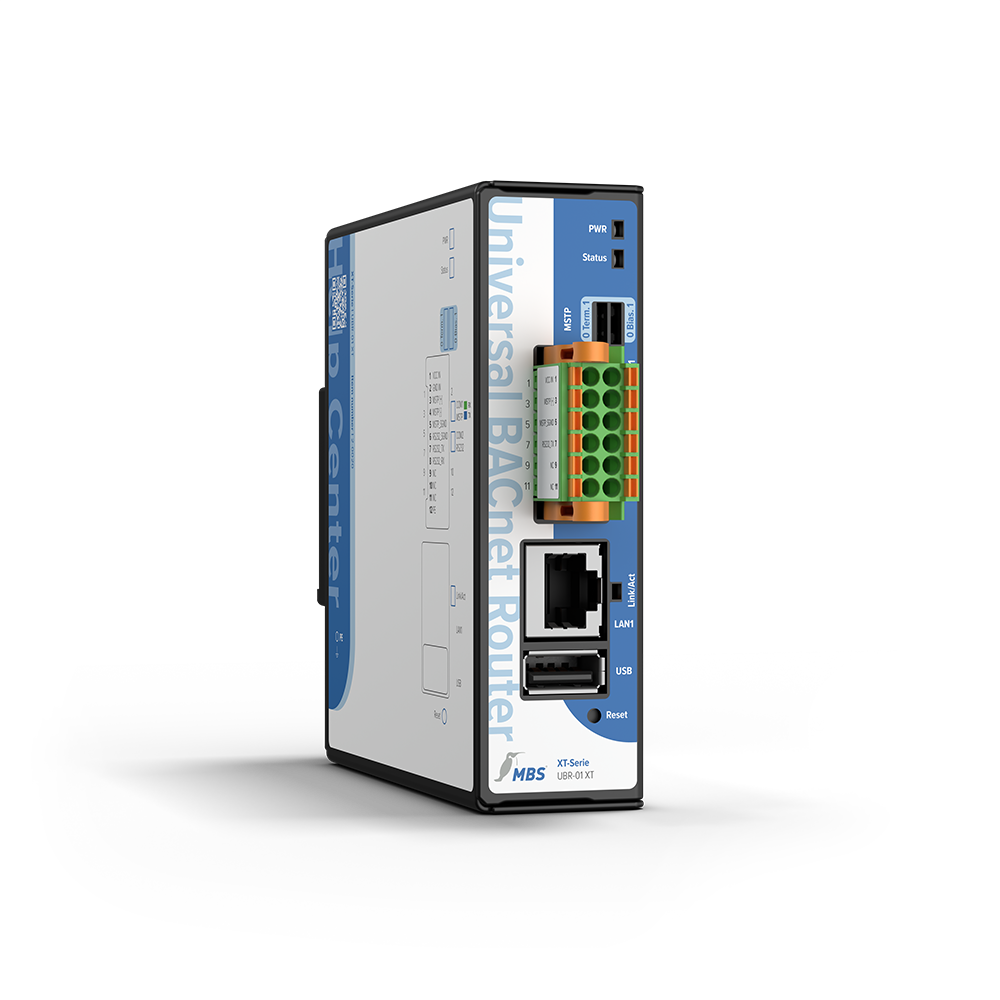
UBR-01 XT
Phased Implementation of BACnet/SC
The UBR-01 XT supports BACnet/MS/TP, BACnet/Ethernet, BACnet/IP, and BACnet/SC. Existing BACnet/IP networks can continue to be used, and individual network segments or connections between buildings can be selectively migrated to BACnet/SC.
A faster CPU and more RAM enable the processing of large amounts of data and allow the device to function as a BACnet/SC hub. The BACnet implementation complies with BACnet Revision 26. Configuration and analysis are performed via the built-in web interface.
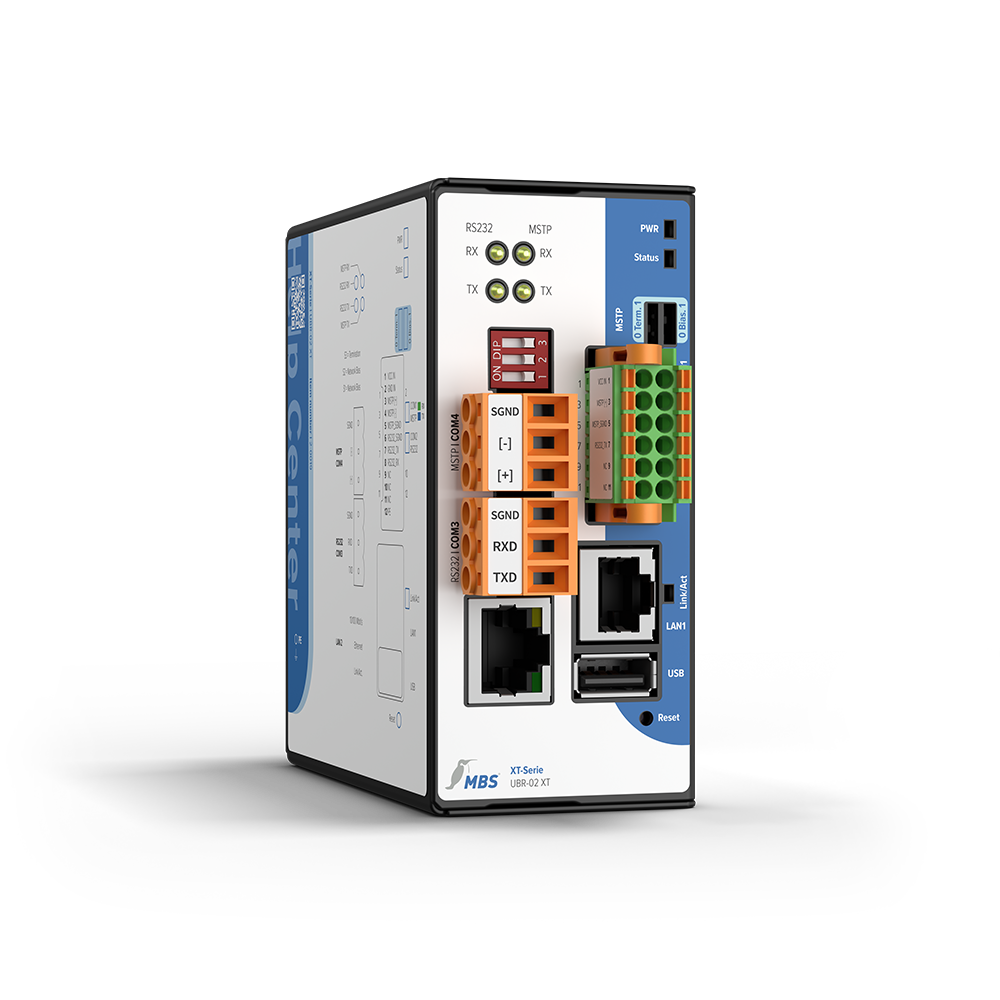
UBR-02 XT
Merge Separate IP Ranges
The UBR-02 XT connects two separate IP ranges via two LAN ports. Two RS485 interfaces also allow for the connection of multiple BACnet/MS/TP segments.
The router supports BACnet/MS/TP, BACnet/Ethernet, BACnet/IP, and BACnet/SC. BACnet/SC communication is secured via TLS; digital certificates support authorized access. A faster CPU and more RAM enable the processing of large amounts of data and allow the router to function as a BACnet/SC hub. The BACnet implementation complies with BACnet Revision 26.
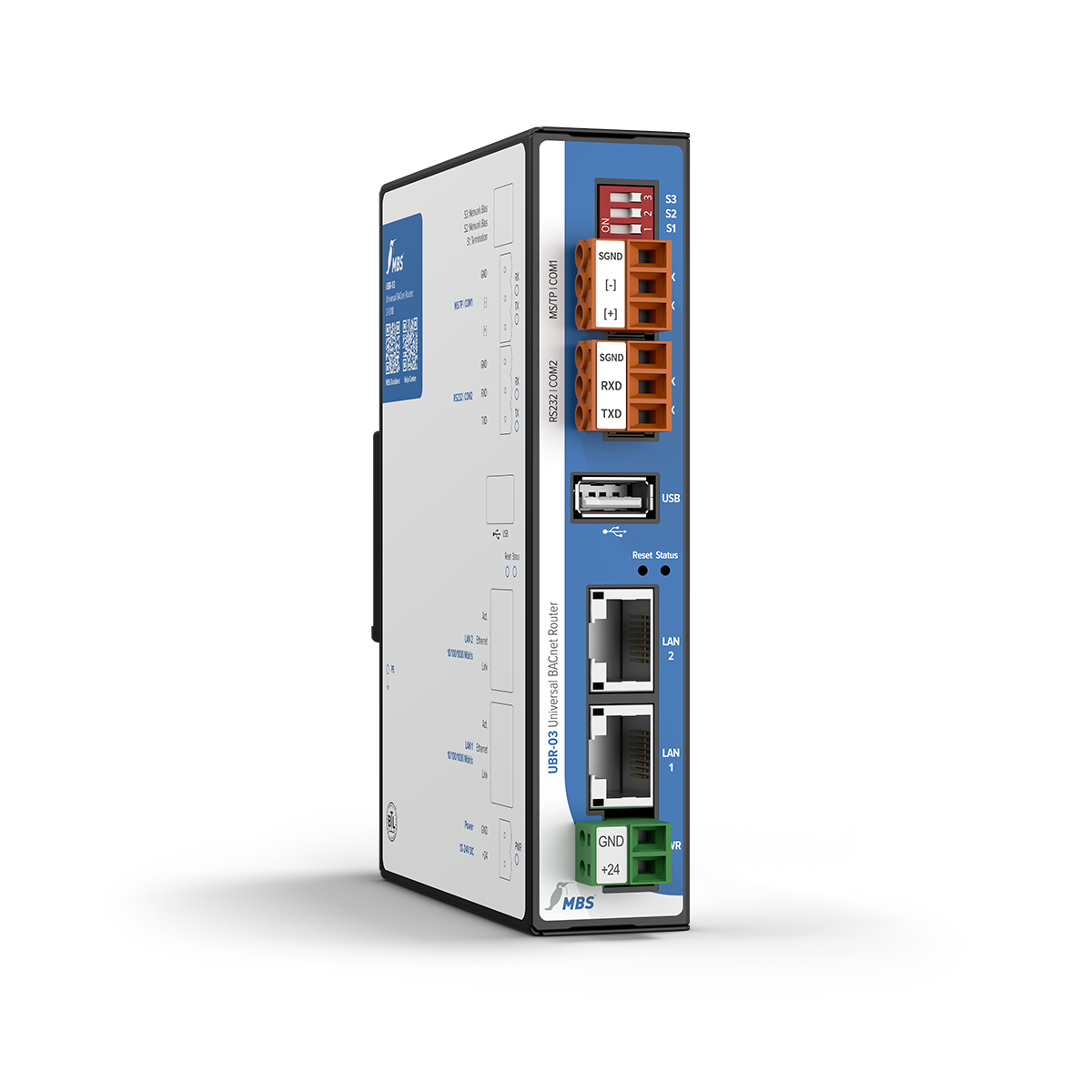
UBR-03
Improved Performance for Large BACnet/SC Networks
The UBR-03 is designed for large properties and complex BACnet/SC topologies. It can be used as a primary hub, failover hub, or normal node, and thus also supports redundantly configured network structures.
A fast dual-core processor and expanded memory provide the resources needed to handle high network loads. The router connects BACnet/SC, BACnet/IP, BACnet/Ethernet, and BACnet/MS/TP. Two LAN interfaces enable integration into various IP network structures. The UBR-03 is based on BACnet Revision 26 and is BACnet-certified.
A Comparison of the Three BACnet Routers:
| Model | Intended Use | Distinctive feature | BACnet Revision |
|---|---|---|---|
| UBR-01 XT | Gradually migrate existing BACnet networks to BACnet/SC | Connecting Different BACnet Media and Use as a BACnet/SC Hub | Revision 26 |
| UBR-02 XT | Connect two separate IP ranges and multiple serial segments | Two LAN ports and two RS-485 interfaces | Revision 26 |
| UBR-03 | Setting Up Large and Complex BACnet/SC Networks | Primary Hub, Failover Hub, or Normal Node | Revision 26 |
Which BACnet router is right for which network?
The UBR-01 XT is suitable for existing BACnet infrastructures that are to be gradually migrated to BACnet/SC.
The UBR-02 XT is intended for use when two separate IP ranges or multiple BACnet/MS/TP segments need to be connected.
The UBR-03 is designed for large BACnet/SC networks, high data volumes, and hub structures that require redundancy and high availability.
Selecting a Router Suitable for the Network Structure
Key factors in making this selection include the BACnet media used, the number of IP and MS/TP segments, the planned BACnet/SC topology, and the requirements for computing power and availability.
MBS can assist you in selecting a router, as well as with the planning, integration, and commissioning of your BACnet infrastructure.
Frequently Asked Questions About BACnet Routers
-
A BACnet router connects networks and transmission media within the BACnet communication standard. A gateway connects systems that use different communication protocols.
-
The UBR-01 XT, UBR-02 XT, and UBR-03 support BACnet Secure Connect. These models differ in terms of their interfaces, hardware specifications, and intended functions within the network.
-
Yes. With the UBR-01 XT and UBR-02 XT, existing BACnet/IP networks can be maintained for the time being. Individual network segments or connections between buildings can be migrated to BACnet/SC in stages.
-
The UBR-02 XT has two LAN ports and can therefore connect two separate IP ranges within a BACnet network.
-
The UBR-03 can be used as a primary hub or a failover hub. This makes it suitable for redundantly configured BACnet/SC topologies.